Feature • AI
Enhanced simulated learning environments with AI-learning guide
Enhancing sandbox-based learning environments on ServiceNow University (SNU) with conversational AI-based feedback.
Traditional learning using simulated experiences within the SNU platform suffered heavily from instructional content lacking standardization for how it was written for end users. This, coupled with learners needing to manage across two browser tabs, raised the risk for errors and detracted from learning, or testing knowledge, as the goal of offering such a modality of education. The following collection of work illustrates the development and delivery of the new learning experience with the inclusion of conversational AI as a patient tutor capable of adapting to the needs of the learner.
Timeline
2 months
Role
Project lead
Type of work
Feature delivery
Audience
Executives & partner teams
Establishing a foundation
At the start of the project, partners were not quite clear on just how to approach the work due to too many vague requirements from the business.
My focus became establishing the right starting assets in order to help evaluate and clarify various elements of the project with partners who were not used to working collaboratively.
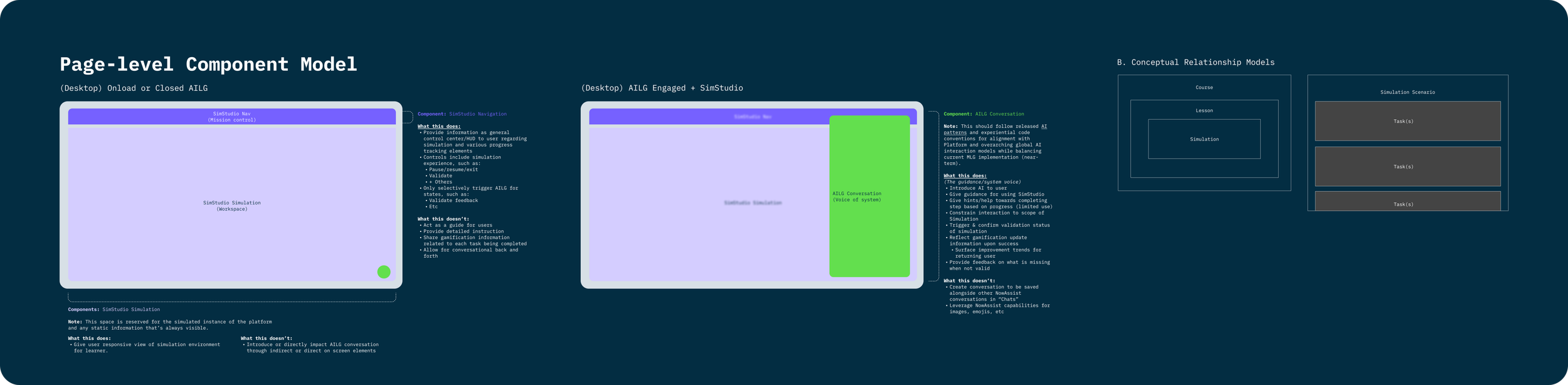
Page level components allowed me to quickly sketch an idea for partners to react to leveraging knowing interaction patterns currently used on ServiceNow University.
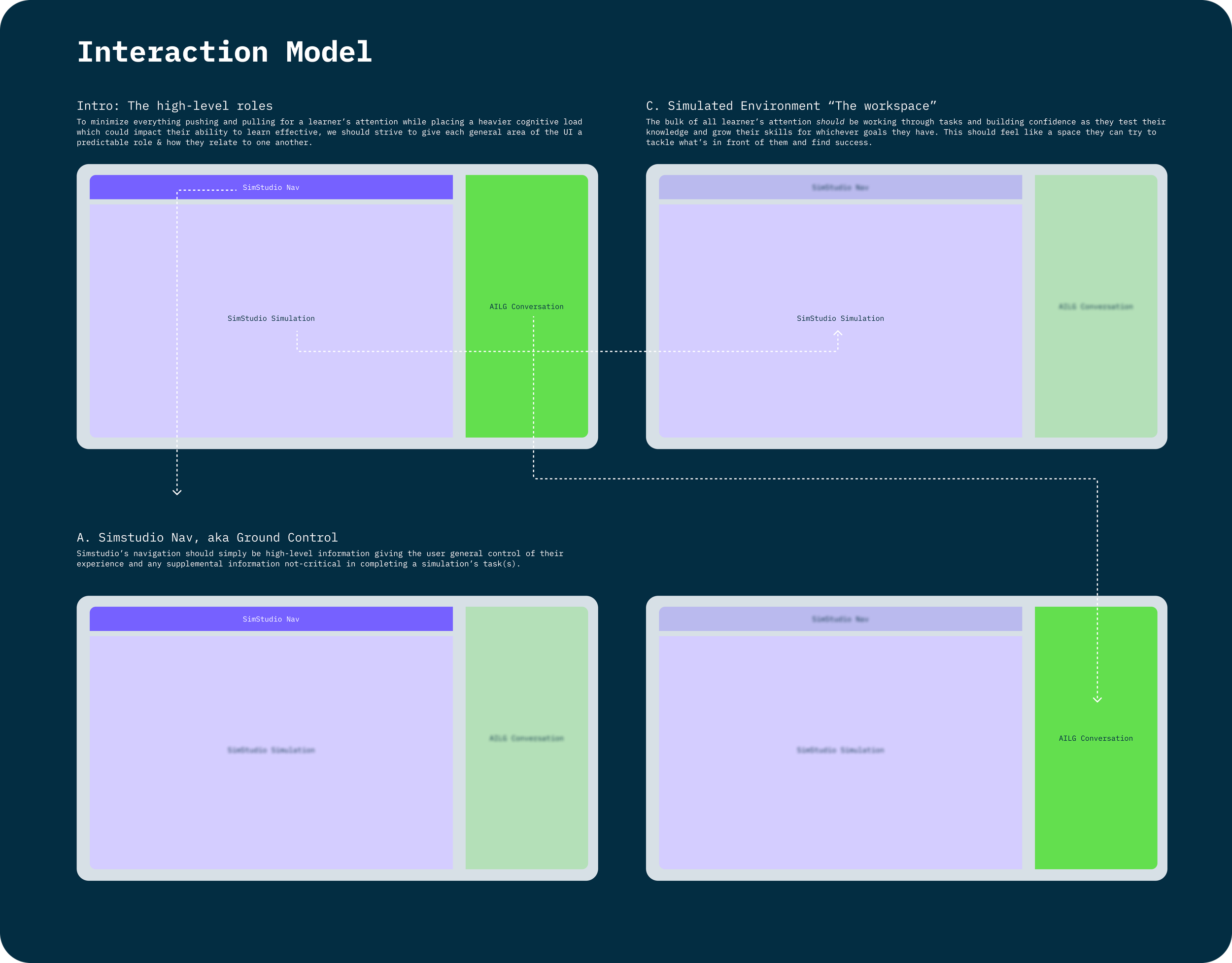
Quick interaction model allowed quick evaluation and alignment with partners on one on a few various patterns to choose from.
Flow logic where I mapped out conditional logic for each scenario documented for MVP was a quick way of assuring stakeholders I was meeting them where they were.
A hypothetical narrative took initial explorations and, through words, allowed me to help paint a mental picture with partners on what the experience could be for initial alignment before diving deeper into hi-fidelity applications.
A prototyped experience enabled us to quickly gain feedback from actual SNU users to validate some key assumptions about learners.
This experience used existing internal patterns to deliver an MVP product early 2026.
Needing a vision
During our research phase it became quickly clear there was a disconnect at the leadership level.
While some expected us to be working on establishing an MVP, others thought we needed to work on a visionary experience we could iterate towards.
In order to accomplish this, I crafted a series of prompts based on the results of driven discussions leveraging lo-fi assets. These prompts were used to create this experience and to help align leadership on a direction