Case study • 2023
Marketing Cloud Account Engagement Transformation*
Reframing a legacy B2B marketing platform to align with Salesforce's next-generation vision and leading to $14.4M in revenue in following Q1.
Marketing Cloud Account Engagement (MCAE) was a long-standing B2B marketing platform that existed alongside multiple overlapping marketing products, each with different experiences and technical foundations. Customers often used more than one, creating fragmentation, accessibility gaps, and adoption challenges.
* “Transformation” refers to all work related to introducing next-gen product functionality to existing Salesforce customers, using B2B & B2C Marketing products, for the purposes of moving customers to the core platform tech-stack.
Executive summary
Marketing Cloud Account Engagement (MCAE) played a critical role within Salesforce’s marketing ecosystem, serving B2B customers alongside parallel B2C and simplified marketing offerings. As Salesforce moved toward a unified marketing vision, MCAE faced growing challenges rooted in legacy architecture, fragmented experiences, and unclear alignment with rapidly evolving next-generation plans.
I led experience strategy and feature definition efforts to help teams move beyond legacy constraints by defining shared principles, mental models, and alignment frameworks. This work created a clearer, more cohesive experience foundation that reduced adoption risk, supported parallel delivery efforts, and informed later transformation work, including Marketing Cloud Engagement (MCE, B2C).
My role
Lead product designer
Timeline
3 months (‘23-’24)
Teams
2 product organizations
Why this work mattered
MCAE was deeply embedded in customer workflows, yet many customers remained on legacy versions despite continued investment in newer capabilities. From a technical perspective, this created mounting risk for Salesforce, but from a customer perspective, there was little incentive to move forward. The newer experience did not clearly communicate value, direction, or alignment with a broader marketing vision.
At the same time, Salesforce’s marketing offerings were split across MCE, MCAE, and Salesforce Easy, each with different interaction models, accessibility standards, and operational complexity. Customers using both B2B and B2C tools were forced to learn entirely different systems that did not behave or feel like parts of a single product. This fragmentation slowed adoption, increased administrative overhead, and made it difficult for teams to guide customers toward a unified future state.
MCAE needed a credible path forward that encouraged customers to leave legacy behind while offering a clear, valuable vision aligned with Salesforce’s next-generation marketing platform (Marketing Cloud Next). Without a shared experience strategy, teams risked reinforcing the fragmentation they were trying to solve. In addition, other key issues including:
Poor WCAG compliance across MCE and MCAE.
Intermixed experiences which included interfaces which customers felt were outdated and signaled lack of support from Salesforce.
Longer Sales cycles due to customer concerns over future of Marketing product offerings compared to competitors.
Various individuals in leadership positions had different ideas on how to address the issue, causing downstream confusion.
Many past attempts to solve this problem failed, causing distrust internally that things were different “this time”.
“97% of emails created leveraged legacy builders and with introducing next-gen meant MCAE users had three different building experiences, and their respective frameworks, engineering had to maintain.”
Marketing Cloud Account Engagement existing partially on the Salesforce Core platform meant what looked like unified experiences were, at times, held together by back-end data syncing and iframed legacy pages.
Significant obstacles existed
As the “smaller” legacy product partially on Core, it was decided the MCAE program would “go first” to bridge existing users to next-gen, but the program had some large issues like:
In order to make progress for the program in a way which was lightweight but also effective, I needed to start with:
Work with MCAE’s Product leadership directly to establish initial, measurable, goals aligning us to what the business deemed success.
Create principles supporting the new business goals while acting as a guide for overarching direction of the experiences we would need to create.
Deliver a high-level vision aligning MCAE to next-gen’s service, and app, teams to use in planning the first release’s worth of work (and later use to build subsequent work off of.
-
Given the early nature of the work, the next-gen product team didn’t have a clearly communicated vision for MCAE teams to leverage, necessitating tight collaboration across all roles.
-
Like most executive mandated initiatives, teams were scrambling to understand what they were doing which mean there was no aligned view on the “what” and how we would measure success.
-
Due to programs being spun up in parallel, gaps in operations helping facilitate knowledge transfer between many teams created risks in leveraging outdated to plan dependencies.
-
Given the wide breadth of what the B2B users needed, MCAE product teams had no clear idea where they should focus/start/
Spanning all three organizations, combined with prior knowledge, allowed me to establish and build upon initial decisions and enabled alignment across multiple programs.
Establishing a foundation
Buried amidst internal slide decks with Gantt charts, competitive analysis, and Sales teams struggles was a message that we were not embracing the future fast enough. Historically speaking, the Marketing Product organization only judged their products on basic metrics, such as adoption, usage, engagement, and overall ACV/AOV.
In order for us to be successful, we needed to establish a common goal to align disparate teams on a shared north star. From that end we needed to work backwards to identify the metrics which would support that goal, which in turn would influence the type of vision we would create together in real-time with the next-gen team.
In working across the Product team I was able to work with MCAE to define and agree on the following goal and metrics.
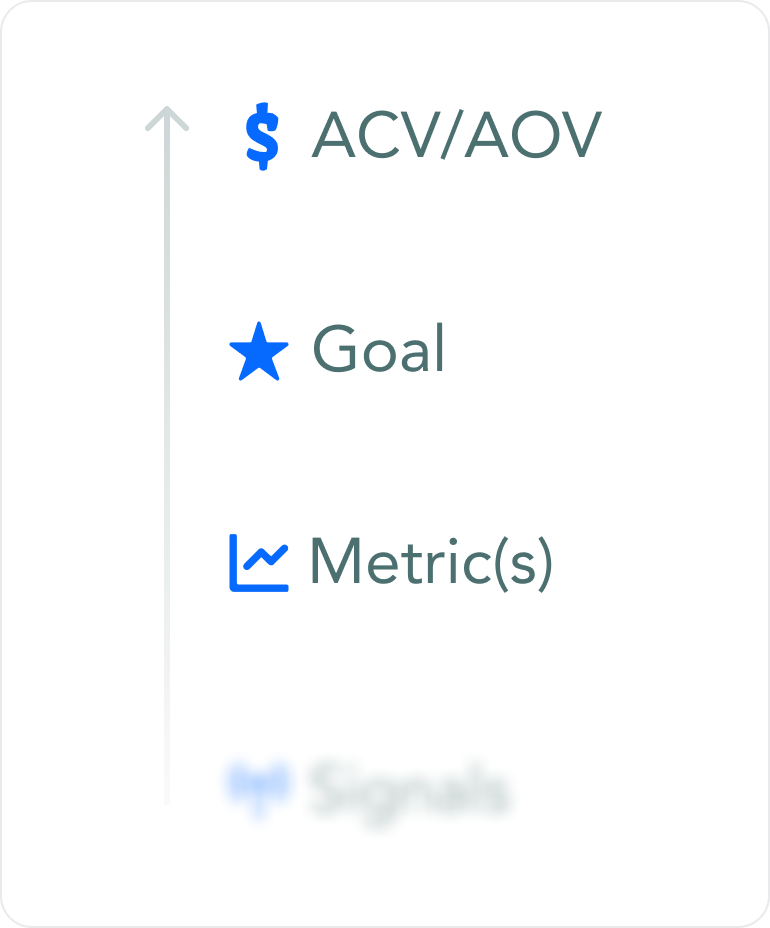
The goal…
Create an ideal approach for gaining MCAE customer awareness of next-gen capabilities and enable their use within current experience(s).
Measured by…
TARGET ATTRITION RANGE
15-20%
Ensure no loss in business in a customer group that could potentially leave for our competition if they felt MCAE was no longer being invested in.
COST-TO-SERVE TARGET
94%
To ensure we are maintaining business, this goal was created to ensure Transformation didn’t require additional internal resources to “make things work”.
Program goals I established through direct partnership with MCAE’s VP of Product.
Establishing guardrails
To move forward amid uncertainty and parallel delivery, teams needed a shared set of guardrails to evaluate decisions consistently. Through a collaboration with the next-gen product, and product-design, teams I created the following principles which were tied directly to the targeted metrics and our goal.
Experience principles
-
Use education as a primary tool for reducing friction. The experience should help users understand what is changing, why it matters, and how to move forward.
-
Do not disrupt users from accomplishing the jobs they rely on MCAE to perform. Any change needed to respect existing workflows and minimize unnecessary interruption.
-
Allow users to adopt next-generation functionality when it makes sense for them. The experience needed to support choice, enabling customers to transition between existing and next-gen.
-
Design experiences that are clear, easy to use, and avoid introducing unnecessary complexity or confusion during transition.
-
When trade-offs were unclear, align to next-generation patterns to build familiarity over time while ensuring MCAE evolved toward the future marketing experience.
Foundational mental models
As part of the MCAE transformation, a key challenge was helping customers shift how they understood and used the platform. Many of the next-generation concepts introduced ways of working that were fundamentally different from how long-time MCAE users thought about assets, campaigns, automation, and segmentation.
Rather than treating these as feature changes, I worked to frame them as mental model shifts that needed to be clearly communicated, intentionally introduced, and supported through education and experience design.
Asset soft-migration
Only assets created or edited with next-gen builders appear in the new CMS, allowing customers to transition gradually without forced migration.
Campaign as the focal point
Campaigns shift from reporting containers to the primary workspace for planning, execution, and measurement.
All automations as flows
Automation moves from multiple tools to a single model, requiring users to rethink logic and orchestration through Flow Builder.
Segmentation vs. static lists
Dynamic segmentation replaces static lists, changing how customers target, automate, and maintain audiences over time.
Delivering a tangible vision
As next-generation marketing capabilities were being defined in parallel, teams needed a concrete way to understand how MCAE customers could move forward without breaking existing workflows. Rather than waiting for every future detail to be finalized, I worked with partners to establish an initial “steel thread” that connected current-state usage to next-generation intent.
The steel thread answered a critical question: How does an existing MCAE customer transition toward the future experience while continuing to do their job today? It provided an end-to-end narrative that grounded abstract transformation goals in real user workflows.
How it was used:
Shared alignment artifact across MCAE, next-generation marketing, and platform teams
Pressure-tested experience principles against real workflows
Identified gaps, dependencies, and adoption risk early
Examined awareness and education strategies
Process:
Working with the next-gen teams, I kicked off the vision work with the purpose of:
Learning the latest engineering, architecture, and experience plans or decisions.
Mapping that understanding against the needs, and experiences, of the MCAE customer which resulted in a collaborative post-it note exercise across teams.
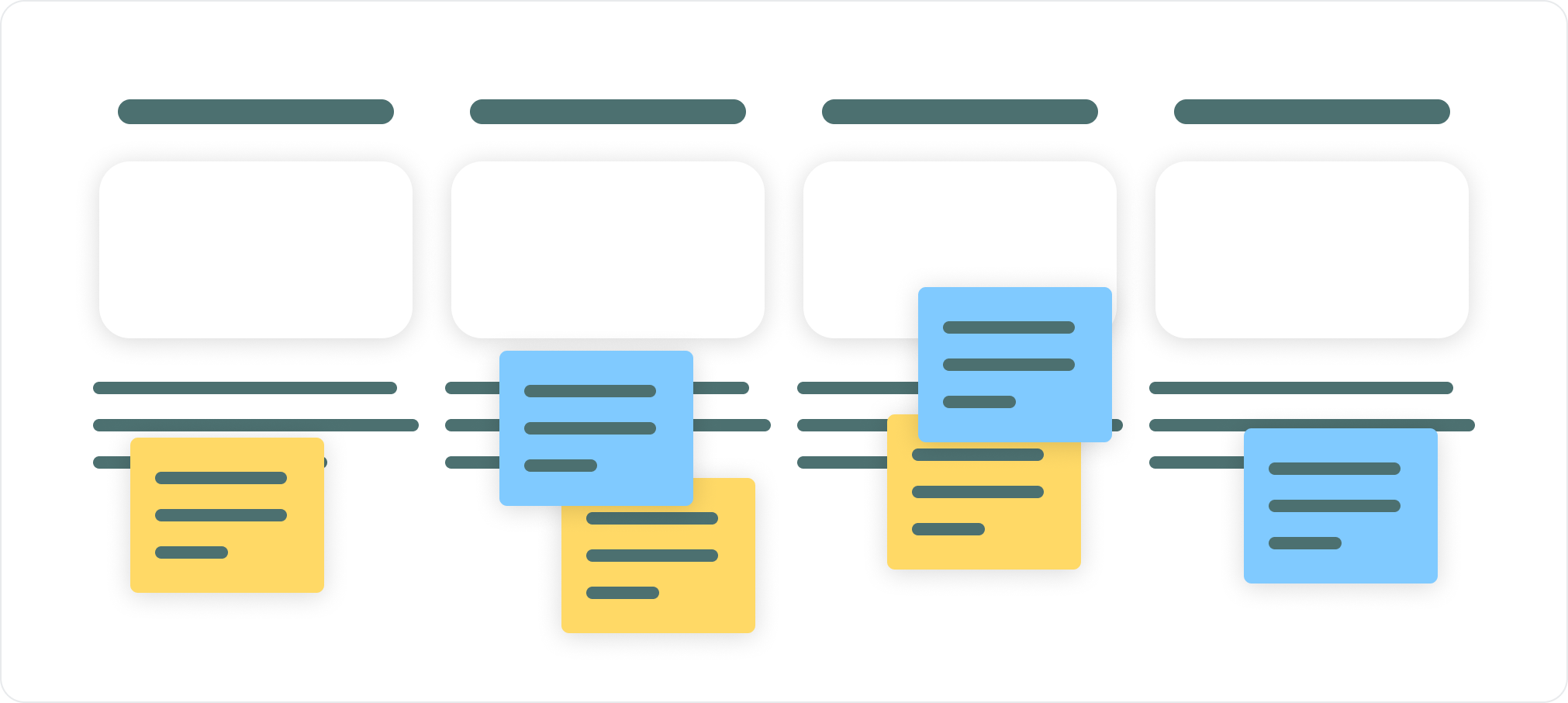
Applying what we knew…
…Collaboration & curiosity were key
Strong working relationships across multiple teams, plus my own general curiosity, allowed me to drive the alignment which had been lacking.
Activities I conducted included:
Stakeholder interviews & experience mapping
Ideation sessions with various product partners
Alignment workshops
Lead ideation & iteration sessions with engineering, content, architecture, & more
Both artifacts became the basis for how the MCAE product org would deliver a parallel vision based on key decisions across many roles
From an initial vision…
This is a small sample of the full steel thread narrative which interwove technical and experiential knowledge with our core principles showing how each and every step connected back upwards to our goal.
… To reality in the 250 release & beyond
With an initial vision established, I then worked with partner teams to create the first release’s worth of requirements and what the impact as it related to our goal would be.

First visionary narrative steel thread aligning MCAE and informing them on the latest next-gen capabilities.

Initial release leveraging latest architectural decisions while highlighting key areas most likely to detract from overarching metrics.

Next iteration narrative building off of prior release work to deliver a path for B2C users to expedite movement to next-gen functionality.